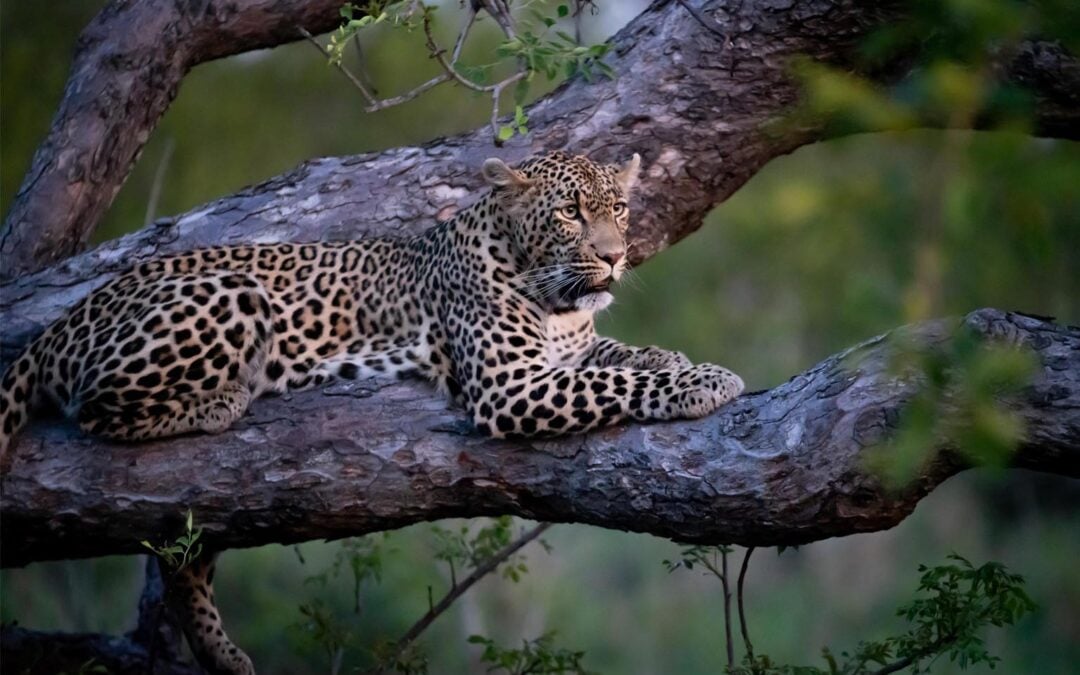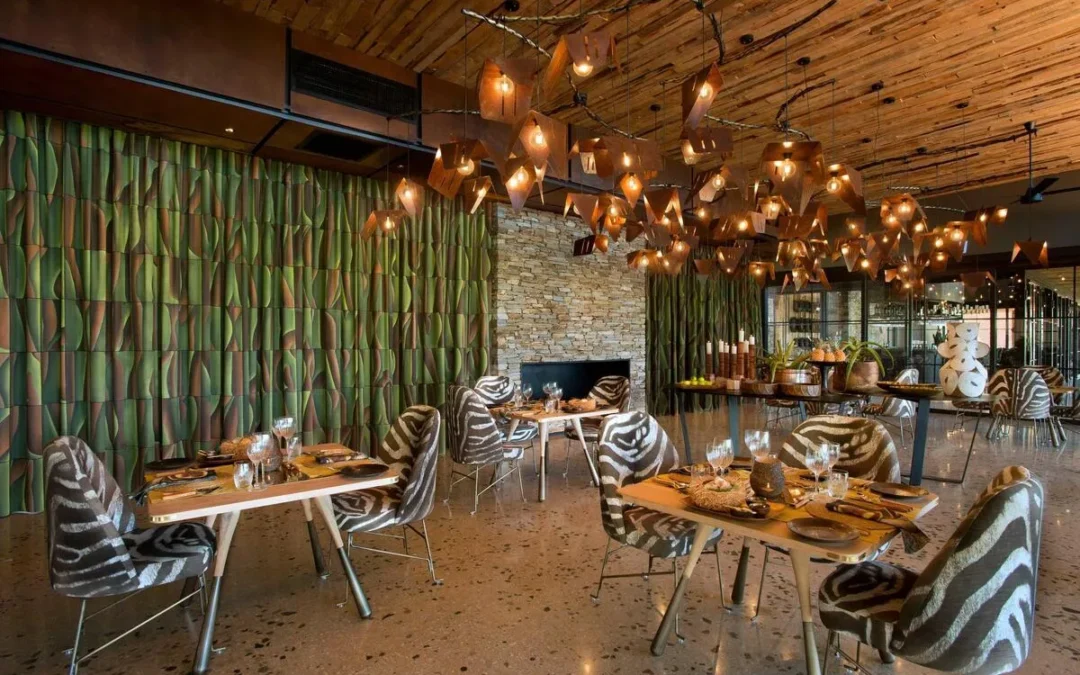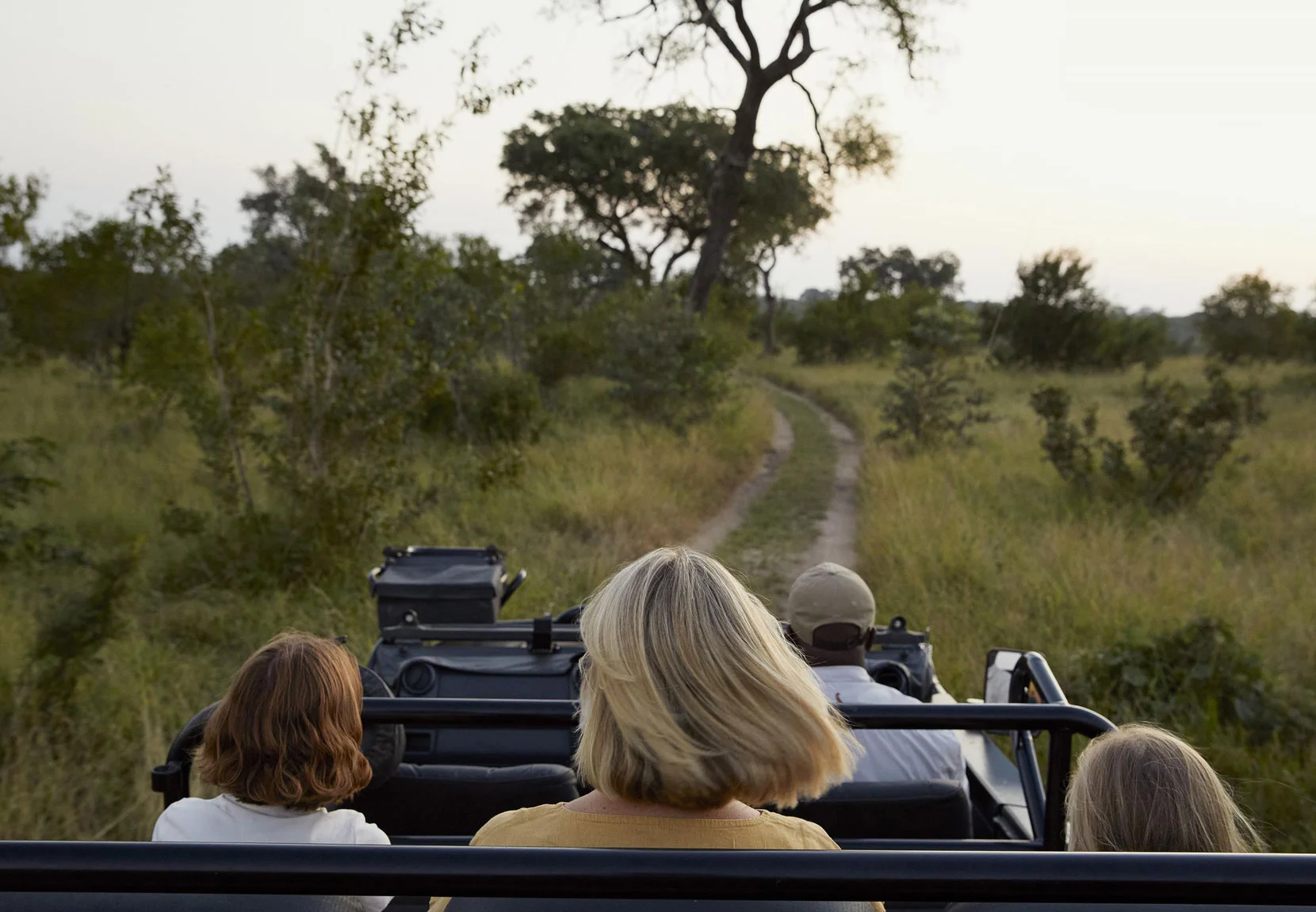
Sabi Sands Game Reserve is one of Africa’s finest destinations for a family safari with children, combining Big Five wildlife with intimate, expert-led game drives in a secure, unfenced wilderness. Set across 65,000 hectares of pristine bushveld in Mpumalanga, South Africa, the reserve offers child-friendly lodge policies, exceptional leopard sightings, and experienced rangers who bring the bush to life for young travellers. Unlike more generic safari destinations, Sabi Sands delivers extraordinary wildlife encounters — including daily leopard sightings — within comfortable flying distance of Johannesburg.
Key Takeaways
- Sabi Sands Game Reserve covers 65,000 ha and shares an unfenced border with Kruger National Park, enabling free wildlife movement across a vast ecosystem.
- Big Five species — elephant, lion, leopard, rhino, and buffalo — are resident and regularly sighted; the reserve has one of the highest leopard densities on Earth.
- Many lodges welcome children aged 6+ (some from birth, others 12+); always confirm the minimum age policy when booking.
- Malaria risk is low, though prophylaxis is recommended — consult a travel health clinic before travelling with young children.
- Specialist family activities include junior ranger programmes, bush walks adapted for older children, and child-friendly game drives with educational rangers.
- The reserve is accessible year-round; the dry winter months (May–September) offer the best wildlife visibility and slightly lower malaria risk.
Is Sabi Sands Game Reserve Good for Families with Children?
Yes — Sabi Sands is genuinely one of the best safari destinations in Africa for families, provided you choose the right lodge and travel at the right time. The private concession model means game drives are conducted in small, dedicated vehicles with specialist rangers, making it far more personal and educational than a public park self-drive. Children who visit often describe it as transformative; experienced rangers are skilled at pitching explanations to different ages, from five-year-olds wondering why zebras have stripes to teenagers asking about conservation genetics.
That said, not every lodge in Sabi Sands is equally family-friendly. The reserve hosts properties across a wide spectrum — from ultra-exclusive camps where silence and adult atmosphere are paramount, to lodges that actively cater for families with dedicated children’s programmes, child-friendly menus, and babysitting services. Matching your children’s ages and energy levels to the right property is the single most important planning decision for a family safari here.
What Is the Minimum Age for a Safari in Sabi Sands?
Minimum ages vary by lodge and, within the same lodge, sometimes by activity. As a general rule across Sabi Sands, most lodges accept children aged 6 and above on shared game drives, while some exclusive-use properties and villas welcome families with infants. A smaller number of high-end adults-focused camps set the minimum at 12 or 16. Always check the specific lodge policy when booking.
For families with young children (under 6), the most practical solution is to book an exclusive-use safari vehicle or an exclusive-use lodge or villa. This gives your family complete flexibility over game drive timing (critical for toddlers who need naps), pace, and focus — rangers can stop longer to watch lions without worrying about other guests. Several Sabi Sands properties, including private wings and standalone villa options, can be booked on an exclusive basis specifically to suit families.
Key minimum-age guidelines across Sabi Sands lodges (general):
- Exclusive-use bookings: All ages, including infants (check individual lodge)
- Shared game drives, family-focused lodges: 6+ (some from 4 with private vehicle)
- Adults-only or romantically-focused camps: 12–16+ (varies)
- Guided bush walks: 16+ at most lodges (some allow 12+ with ranger discretion)
What Wildlife Will Children See in Sabi Sands?
Children visiting Sabi Sands are almost guaranteed to see the Big Five — elephant, lion, leopard, rhino, and buffalo — often within a single two-day stay. The reserve’s wildlife density is exceptional: leopard sightings are recorded daily across most of the reserve, making it one of the most reliable places on Earth to see this elusive cat in the wild. For many children, the moment a leopard drops out of a marula tree two metres from the game vehicle becomes the defining memory of their childhood.
Beyond the Big Five, Sabi Sands hosts resident wild dog packs — a species critically endangered across Africa — and a rich supporting cast including giraffe, zebra, hyena, vervet monkey, warthog, impala, and dozens of antelope species. More than 350 bird species have been recorded, a detail that surprises many families expecting only mammals. Rangers typically engage children directly in spotting and identifying wildlife during drives, turning the experience into an active, participatory adventure rather than passive observation.
Wildlife children are most likely to encounter:
| Species | Sighting Likelihood | Best Time of Day |
|---|---|---|
| Leopard | Very high (daily sightings) | Dawn & dusk drives |
| Elephant | Very high | Morning & afternoon |
| Lion | High | Dawn drives, evening |
| Buffalo | Very high (large herds) | Morning drives |
| Rhino | Moderate–high | Morning drives |
| Wild dog | Moderate (resident packs) | Dawn drives |
| Giraffe | High | Any time |
| Warthog | Very high (children’s favourite) | Morning |
When Is the Best Time to Visit Sabi Sands Game Reserve with Children?
The dry winter season, from May through September, is widely considered the best period to visit Sabi Sands with children. Reduced vegetation makes wildlife far easier to spot — particularly lions resting in open clearings and leopards draped in leafless trees — and the cooler temperatures (daytime highs of 20–26°C) are comfortable for children who might otherwise find the heat tiring. Malaria mosquito activity is also lower during the dry winter months, which is a meaningful consideration for families travelling with young children.
The summer green season (November–March) brings lush, photogenic landscapes, newborn animals, and exceptional birdlife, but the dense bush can make game viewing slightly harder and the heat and humidity more challenging for young children. The South African school holiday windows — July, December, and Easter — are the most popular family travel periods; booking at least 9–12 months in advance is essential for these windows, particularly for family-friendly lodges with limited capacity.
| Season | Months | Wildlife Visibility | Temperature | Malaria Risk | Family Rating |
|---|---|---|---|---|---|
| Dry (winter) | May–Sep | Excellent | Mild (15–26°C) | Low | ★★★★★ |
| Shoulder | Apr, Oct–Nov | Very good | Warm (22–30°C) | Moderate | ★★★★☆ |
| Green (summer) | Dec–Mar | Good (babies!) | Hot & humid (28–35°C) | Higher | ★★★☆☆ |
Is Sabi Sands Malaria-Safe for Children?
Sabi Sands falls within a low malaria risk zone, though it is not classified as malaria-free. The Mpumalanga lowveld experiences seasonal malaria transmission, with risk highest from November through April during the hot, wet summer. For families with children — especially those under five or with medical vulnerabilities — this is an important planning consideration that deserves a direct conversation with a travel health clinic or GP before departure.
During the dry winter months (May–September), malaria transmission is significantly lower, making this the medically preferable window for families with young children. Prophylaxis medication is available for children and is generally recommended for all ages visiting Sabi Sands. Reputable lodges mitigate exposure through screened accommodation, mosquito nets, and long-sleeve dress codes at sunset — the window of highest mosquito activity.
Families who prefer a guaranteed malaria-free Big Five safari option may consider the Eastern Cape (Amakhala, Addo) or Madikwe Game Reserve as alternatives, though neither offers the extraordinary leopard density and wildlife intimacy that makes Sabi Sands exceptional.
What Activities Are Available for Children in Sabi Sands?
The primary activity — and the one children most remember — is the twice-daily game drive in an open 4×4 vehicle led by an expert ranger and tracker. Most lodges in Sabi Sands run a dawn drive (departing around 05:30–06:00) and an afternoon drive (departing around 15:30–16:00), the latter typically continuing after dark with a spotlight to observe nocturnal animals. Both drives last approximately three hours, with a comfort stop mid-way at a scenic bush location.
Beyond drives, child-specific activities at family-friendly lodges include:
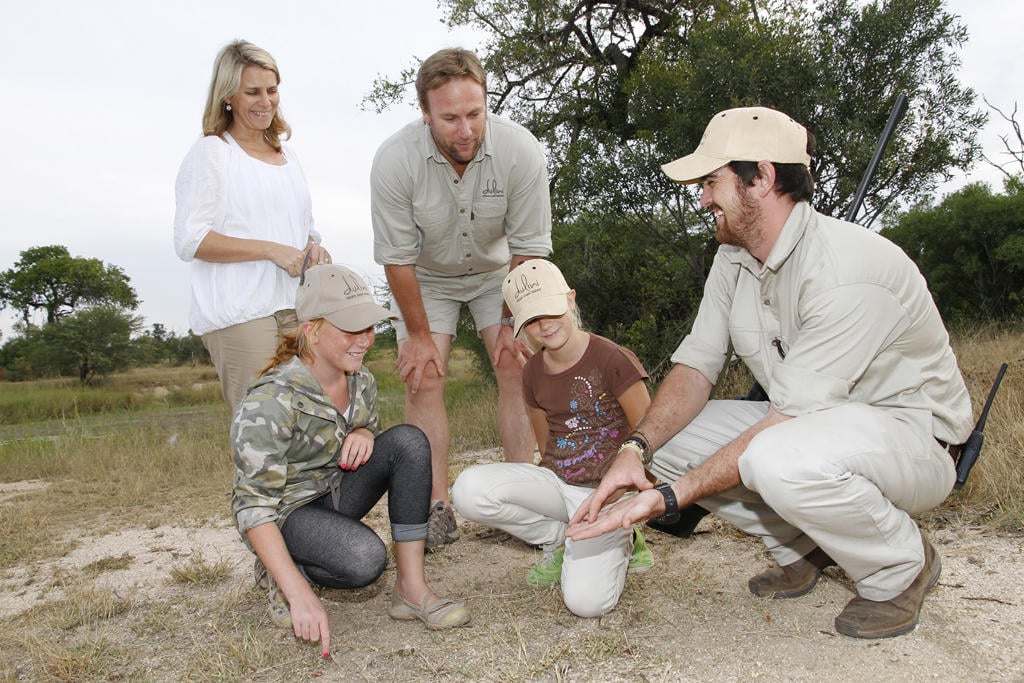
- Junior ranger programmes: Guided identification of animal tracks, scat, and plants; bush skills sessions tailored by age
- Bush walks: Available for children 12–16+ (ranger-dependent); a profoundly different sensory experience from the vehicle
- Sundowner stops: Vehicles pause at a scenic viewpoint at dusk for drinks and snacks — a magical family moment
- Night drives with spotlight: Older children love identifying nocturnal species — bush babies, porcupines, civets, and owls
- Ranger-led education at the lodge: Many rangers will show children skins, skulls, and feathers during downtime
- Pool time and lodge exploration: Most lodges have swimming pools; the midday heat break becomes valuable family time
Londolozi, one of Sabi Sands’ most celebrated lodges, pioneered ethical wildlife photography and maintains a long-running individual leopard tracking programme going back to 1974 — rangers can identify individual leopards by their unique spot patterns and share the life history of animals you encounter. For children with any interest in nature or science, this kind of depth is rare and genuinely captivating.
How to Choose a Family-Friendly Lodge in Sabi Sands
Choosing the right lodge is more important than choosing Sabi Sands itself. The wrong lodge — one that is adults-oriented with strict silence policies, limited children’s menus, or no family rooms — can diminish even the finest wildlife sightings. The right lodge makes every element work together, from meal timings adjusted to children’s schedules to rangers who engage directly with the youngest guests.
Key factors to assess when selecting a family lodge in Sabi Sands:
- Minimum age policy: Confirm the exact age for shared drives, walks, and the property generally
- Family room or interconnecting rooms: Essential for safety and practicality with young children
- Exclusive-use vehicle option: Families with toddlers or children under 6 should budget for a private vehicle
- Children’s menus and meal flexibility: Top lodges offer full children’s menus and flexible meal times
- Babysitting or crèche services: Some lodges offer supervised children’s programmes during adult activities
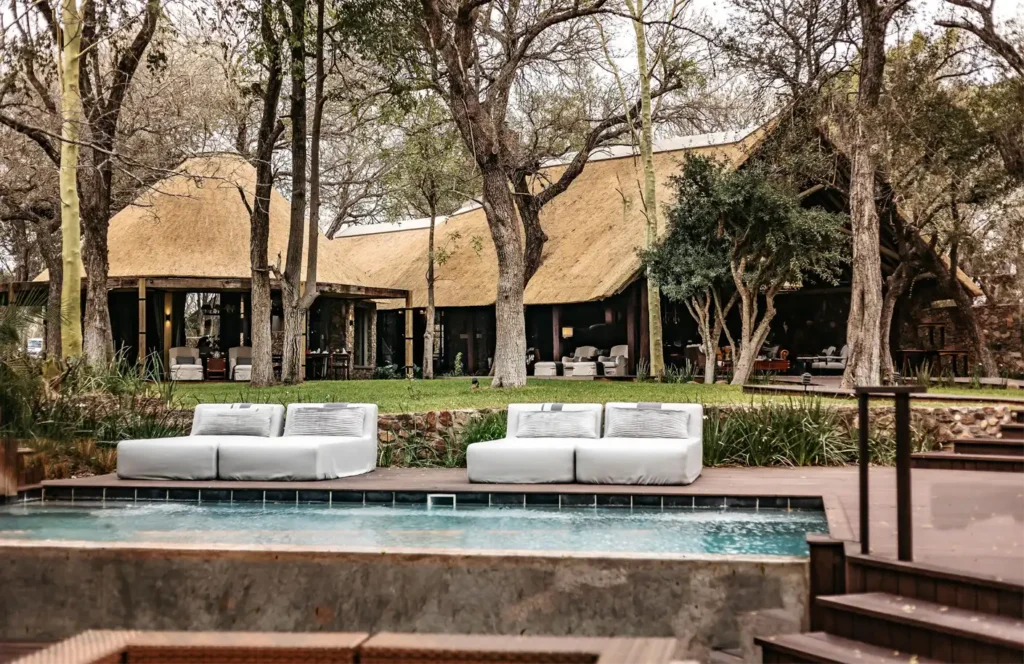
- Pool and outdoor space: The midday downtime is significant; a good pool and shaded outdoor area matters
- Ranger experience with children: Ask specifically — a ranger who naturally engages children transforms the experience
Lodges within Sabi Sands such as Dulini (including Dulini River Lodge, Dulini Leadwood, and Dulini Moya) and Savanna Private Game Reserve are well-regarded for accommodating families with older children on private traversing concessions with excellent wildlife density. The Londolozi camps, particularly Founders Camp and Varty Camp, have a long tradition of welcoming multi-generational family groups.
What Does a Family Safari in Sabi Sands Cost?
Sabi Sands sits at the premium end of the African safari market, and family costs should be factored carefully. Most lodges operate on an all-inclusive rate covering accommodation, all meals, twice-daily game drives, ranger-led activities, and house beverages. International flights, transfers, travel insurance, and tips are typically excluded.
Rates vary significantly by lodge tier, season, and whether you book a private vehicle:
- Mid-range family lodges: From approximately USD 800–1,200 per person per night (all-inclusive)
- Premier lodges (Londolozi, Dulini, Savanna): From approximately USD 1,200–2,000+ per person per night
- Private exclusive-use villa/camp: Priced per unit rather than per person — often represents value for larger families
- Children’s rates: Many lodges offer discounted rates for children aged 6–12; under-6 rates apply where accepted
- Private vehicle supplement: Adds approximately USD 200–500 per vehicle per day; strongly recommended for families with children under 8
A typical family of four (two adults, two children aged 8 and 12) should budget for a minimum 3-night stay; 4–5 nights is ideal to absorb the time zone, settle into the rhythm, and maximise wildlife encounters. Most specialist operators advise against a single-night stay for families — the game viewing compound significantly from day to day as rangers build up knowledge of animal locations.
How Do You Get to Sabi Sands Game Reserve?
Sabi Sands is accessed primarily via fly-in transfer from Johannesburg’s OR Tambo International Airport to a private airstrip within the reserve, most commonly Londolozi Airstrip or Arathusa Airstrip. Flight time is approximately 50 minutes, making it far more practical for families with children than a 6–8 hour road transfer. Federal Air and Airlink operate scheduled scheduled services linking OR Tambo to bush airstrips across the Sabi Sands corridor multiple times daily.
For families arriving in South Africa via Cape Town or who prefer road travel, the drive from OR Tambo takes approximately 5–6 hours via the R40 through Hazyview. The Panorama Route — passing Blyde River Canyon and God’s Window — makes the road journey genuinely scenic and is a rewarding option for families who enjoy road trips. Most lodges can arrange a private road transfer if requested.
Getting there — at a glance:
| Transfer option | Duration | Best for |
|---|---|---|
| Fly-in (OR Tambo → airstrip) | ~50 min | Most families (convenience) |
| Fly-in (Cape Town → OR Tambo → airstrip) | ~3.5 hrs total | Cape-Sabi Sands combo trips |
| Road transfer (OR Tambo → Sabi Sands) | ~5–6 hrs | Families preferring scenic drive |
| Self-drive (experienced driver) | ~5–6 hrs | Budget-conscious; hire SUV recommended |
Frequently Asked Questions: Sabi Sands Game Reserve with Children
Is Sabi Sands Game Reserve safe for young children?
Yes. Sabi Sands is considered safe for children when families stay within the lodge perimeter as directed and follow ranger instructions during game drives. The private reserve model means controlled, supervised wildlife encounters — not a public park where animals can approach unguided. Rangers are trained to manage proximity to predators safely. Children should always remain seated and quiet on game drives, which rangers brief before departure. At night, walking between accommodation and common areas is done with a guide.
What age is best for a first safari in Sabi Sands?
Most safari specialists suggest 6–8 years old as the ideal minimum for a first Sabi Sands safari. Children of this age can sustain the focus a three-hour game drive demands, understand ranger instructions, and genuinely process and remember the wildlife encounters. Children aged 10 and above typically get even more from the experience, particularly the educational depth that specialist rangers provide. Teenagers often describe a Sabi Sands safari as one of the most impactful experiences of their lives.
Do lodges in Sabi Sands provide children’s meals?
Family-friendly lodges in Sabi Sands generally offer full children’s menus with familiar, nutritious options alongside the adult fine-dining menu. High-quality properties like Londolozi and Dulini are accustomed to catering for international families with different dietary requirements — vegetarian, gluten-free, and allergy-specific requests are handled without issue when communicated in advance. Mealtimes at most lodges are flexible enough to accommodate younger children’s schedules.
Can toddlers and babies go on safari in Sabi Sands?
Infants and toddlers can visit Sabi Sands if you book an exclusive-use lodge or villa where your family has the property entirely to yourselves. On shared game drives, the minimum age is typically 6 at most lodges. An exclusive vehicle gives maximum flexibility — you can return early if a child is tired, pause longer at sightings, and adapt the pace to your family’s rhythm. Specialists in family safari planning can identify the specific lodges and villas that genuinely welcome families with babies.
How many nights should a family spend in Sabi Sands?
A minimum of 3 nights is recommended for families; 4–5 nights is ideal. The first day typically involves travel and settling in. From day two onward, rangers accumulate knowledge of specific animal locations, resulting in markedly better sightings. Big Five completions (seeing all five species) are overwhelmingly achieved by guests staying three nights or longer. Families combining Sabi Sands with Cape Town typically allocate 4–5 nights in the bush and 3–4 nights in Cape Town for a well-rounded South Africa trip.
Should we take malaria medication when visiting Sabi Sands with children?
Yes, prophylaxis is recommended for all visitors including children, particularly during the summer months (November–April). Your GP or a specialist travel health clinic will advise on the most suitable medication for your children’s ages and health profiles. During the dry winter season (May–September), risk is lower but prophylaxis remains standard practice for most medical advisors. Reputable lodges supplement this with screened rooms, mosquito nets, and insect-repellent protocols.
Is it worth combining Sabi Sands with another destination for a family trip?
Yes — the classic family combination is Sabi Sands plus Cape Town, typically starting or ending with 3–4 nights in Cape Town for its beaches, penguin colony at Boulders Beach, Table Mountain, and Cape Peninsula wildlife. Families with older teenagers sometimes extend to Victoria Falls (Zimbabwe/Zambia) or combine with Botswana’s Chobe National Park. A 10–14 day itinerary gives enough time to do justice to both a safari and a cultural/coastal component without exhausting younger children.
What should children pack for a safari in Sabi Sands?
Packing smart matters for children on safari. Neutral colours (khaki, green, beige) are standard — bright colours and particularly white are discouraged as they can startle wildlife and affect game drive atmosphere. Key items include: lightweight long-sleeved layers for dawn drives (mornings can be cold, especially May–August), closed-toe shoes for any bush walking, a wide-brimmed hat, high-factor sunscreen, insect repellent, binoculars sized for small hands, and a notebook for junior rangers to record sightings. Leave patterned or camouflage clothing at home — the latter is restricted in some South African conservation areas.
Plan Your Family Safari in Sabi Sands Game Reserve
A Sabi Sands safari with children, planned well, is one of the most extraordinary family experiences on Earth — the kind that children carry into adulthood and that quietly shapes how they think about the natural world. Getting the lodge match right, the timing right, and the activity programme right makes the difference between a very good trip and an unforgettable one. African Safari Group (ASG), the specialist luxury safari operator, has extensive firsthand knowledge of every family-friendly property in Sabi Sands and can match your children’s ages, interests, and travel style to exactly the right combination. Enquire now to start planning your family’s Sabi Sands adventure.