Sabi Sands Game Reserve is a 65,000-hectare private wildlife concession in Mpumalanga, South Africa, bordering Kruger National Park with no fences between them — allowing the full Big Five, including resident wild dog packs, to roam freely across one of the most wildlife-dense ecosystems on the continent. It is widely regarded as Africa’s premier destination for leopard sightings, lion encounters, and ethical big cat photography, underpinned by decades of habituated wildlife and world-class guiding.
Key Takeaways
- 65,000 ha of privately managed wilderness, unfenced with Kruger National Park since the 1990s — one continuous ecosystem of nearly 2 million hectares.
- Big Five guaranteed habitat: elephant, lion, leopard, rhino, and buffalo, plus resident wild dog packs and an extraordinary diversity of plains game and birdlife.
- Leopard density among the highest recorded globally — individual animals are tracked across generations; daily sightings are the norm, not the exception.
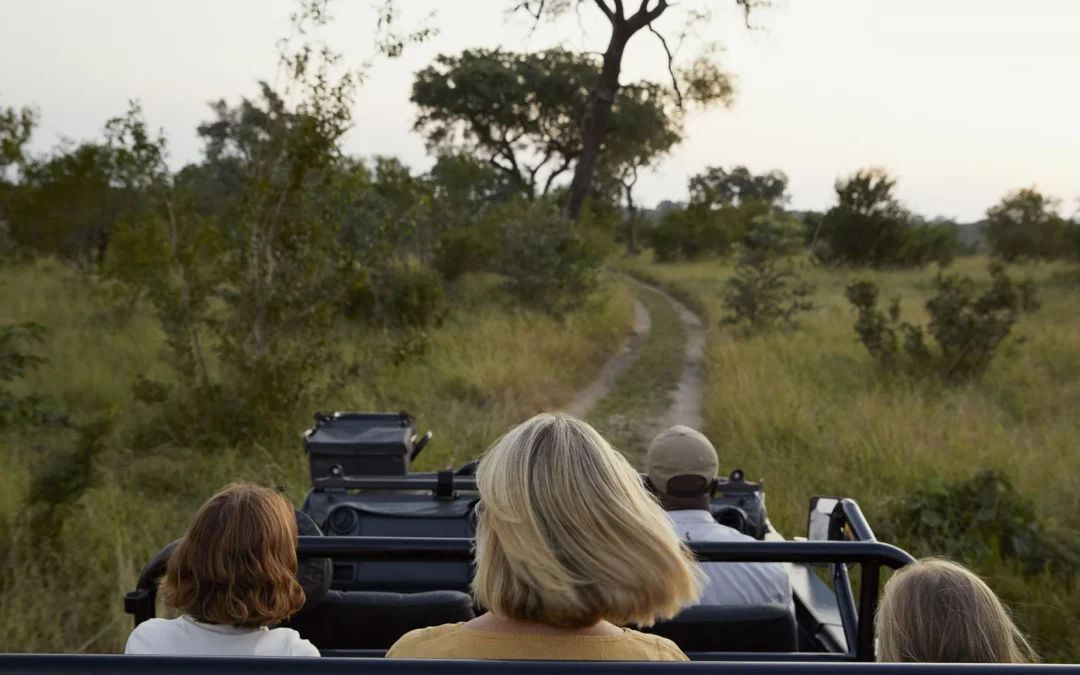
- Twice-daily game drives in open 4×4 vehicles, led by expert rangers and Shangaan trackers — an experience that self-drive Kruger cannot replicate.
- Malaria risk is low relative to many East African destinations; prophylaxis is recommended but this is a year-round travel destination with no off-season.
- Lodge pricing is premium — full-board, all-inclusive rates typically range from USD 800 to USD 2,500+ per person per night, depending on lodge and season.
What Is Sabi Sands Game Reserve and Why Is It Considered Africa’s Best Safari?
Sabi Sands Game Reserve is a privately owned collective of farms and concessions in Mpumalanga, South Africa, operating as a unified 65,000-hectare (650 km²) conservation area adjacent to Kruger National Park. The reserve’s boundary with Kruger has been fence-free since the 1990s, meaning wildlife moves without restriction across what effectively becomes a vast, unfragmented wilderness stretching millions of hectares into Mozambique through the Great Limpopo Transfrontier Park.
What distinguishes Sabi Sands from other African safari destinations is the combination of wildlife density, habituated animals, and guiding excellence. The reserve is home to more leopards photographed per square kilometre than any comparable wildlife area in Africa — a reputation built over five decades of careful habituation by lodges like Londolozi, which began tracking individual leopards from 1974 and is credited with restoring the Sabi Sands leopard population from near-extinction.
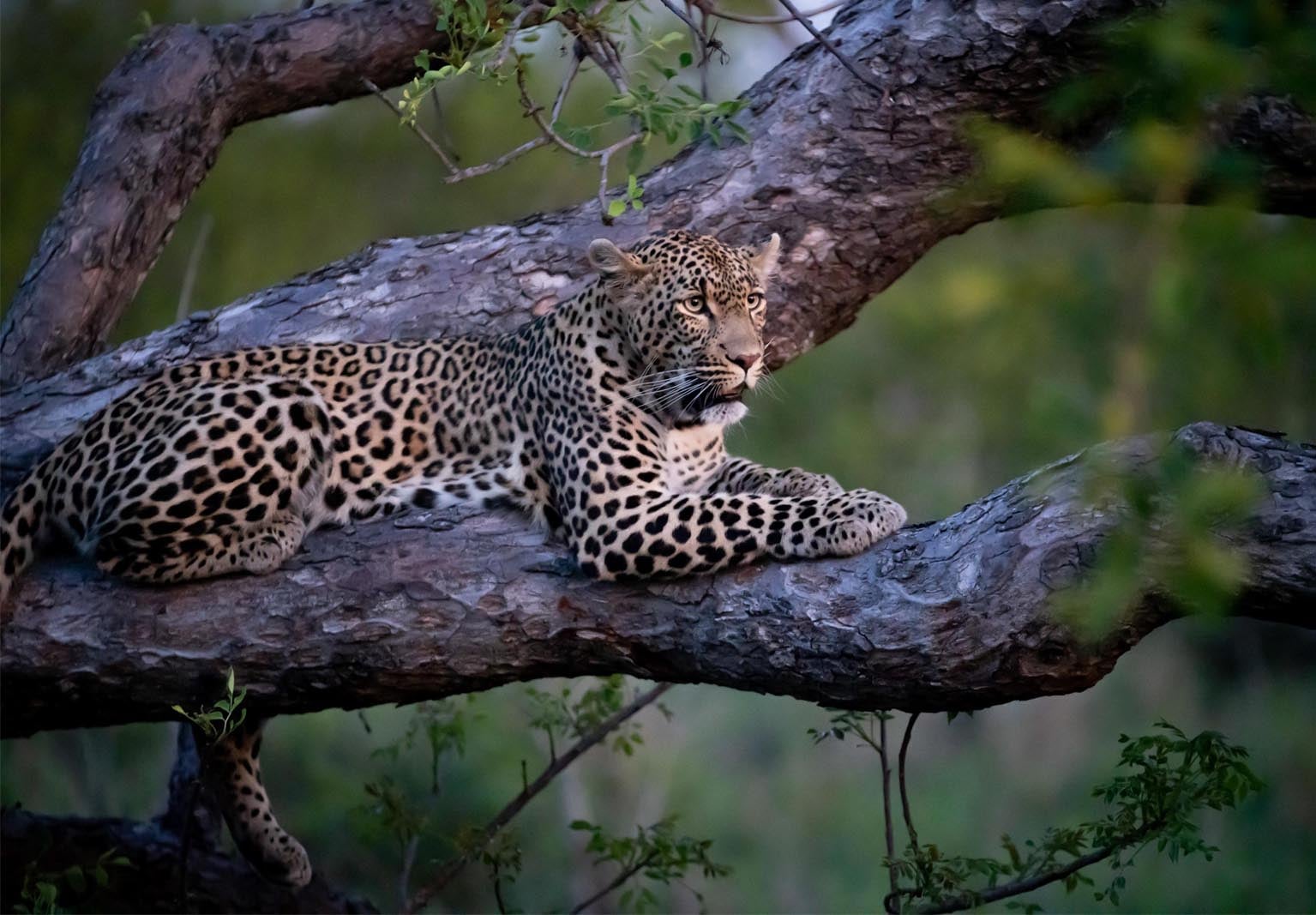
Guests here do not simply “spot” wildlife from a distance. Rangers and Shangaan trackers follow specific animals through the bush on foot to find them, then position the open game drive vehicle for unobstructed, unhurried observation at remarkably close range. This is a safari style that transforms a leopard lying in a marula tree from a blurry telephoto photograph into a lived, intimate encounter.
What Wildlife Can You See in Sabi Sands Game Reserve?
Sabi Sands offers Big Five sightings — lion, leopard, elephant, rhino, and buffalo — alongside a broader cast of predators, plains game, and specialist species that few reserves can match for density and accessibility.
Leopard is the signature species. Thanks to decades of habituation, individual leopards are named, tracked by rangers and allow vehicle proximity that would be impossible in a national park. The reserve’s research data represents one of the longest continuous leopard observation records anywhere in Africa.
Lion prides are resident across multiple traversing areas. Encounters with large prides — often on kills or engaged in territorial activity — are frequent, particularly in the early morning and late afternoon game drives.
Wild dog packs maintain territories within Sabi Sands, and sightings — while never guaranteed for any single day — are more reliably achieved here than at almost any other South African reserve. The reserve’s unfenced connection to Kruger means packs can range over enormous distances, rangers and trackers use spoor, calls and recent sightings to help locate lion prides.
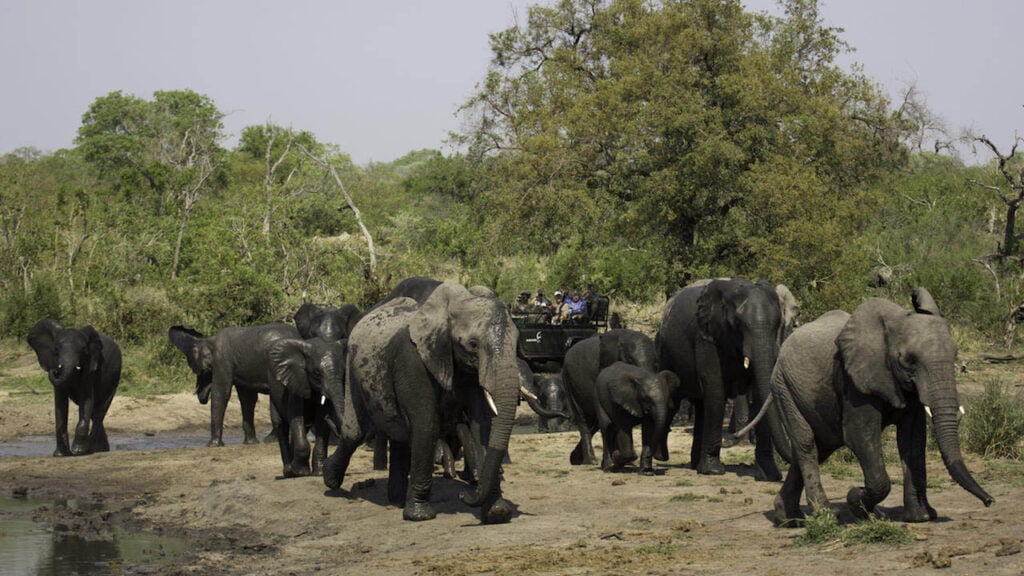
Elephant herds move through the reserve throughout the year, often appearing at camp waterholes or crossing game drive roads at close range. White and black rhino are present, with white rhino sightings regular for most traversing areas.
Cheetah is sighted less predictably than the other large predators — the denser bush of the western Sabi Sands suits leopard more than cheetah — but sightings occur, particularly in more open areas. Hyena clans are reliably encountered, often around active dens.
Beyond the headline species, a Sabi Sands visit encompasses giraffe, zebra, wildebeest, impala, kudu, nyala, waterbuck, warthog, and numerous smaller predators including serval, caracal, honey badger, and African wild cat. The reserve’s birdlife exceeds 350 species, making it a rewarding destination for serious birders alongside mainstream wildlife enthusiasts.
How Does Sabi Sands Compare to Kruger National Park?
Sabi Sands and Kruger National Park share an unfenced boundary and much of the same wildlife, but the visitor experience is fundamentally different — and for most travellers seeking a premium, immersive safari, Sabi Sands delivers an experience that self-drive Kruger cannot replicate.
| Factor | Sabi Sands Game Reserve | Kruger National Park |
|---|---|---|
| Access | Private — lodge guests only | Public — 1.5 million visitors/year |
| Game drives | Expert ranger + Shangaan tracker; open vehicles; off-road permitted | Self-drive on tarred/gravel roads; off-road prohibited |
| Vehicle density | Max 3 vehicles per sighting (most lodges) | Unlimited vehicles at popular sightings |
| Wildlife habituation | Decades of vehicle habituation — animals ignore vehicles at close range | Animals generally more wary of vehicles |
| Night drives | ✅ Standard (nocturnal species including leopard, hyena, civets) | ❌ Not permitted for self-drive |
| Walking safaris | ✅ Available at most lodges | Limited — guided wilderness trails only |
| Cost | USD 800–2,500+ per person per night (all-inclusive) | USD 50–150 per night (self-catering camps) |
| Best for | Immersive wildlife encounters; photography; first-time luxury safari | Budget-conscious; road-trip style; birding |
The unfenced boundary means the same elephant herd or lion pride can appear on either side of the boundary. What differs is how you experience them. In Sabi Sands, your ranger will have tracked that pride from before dawn, knows the individual animals by name, and will position the vehicle for a dawn sighting with no other vehicle in sight. That level of intentional, guided, exclusive wildlife experience is the reserve’s core proposition.
Which Are the Best Lodges in Sabi Sands Game Reserve?
Sabi Sands hosts a concentration of Africa’s most celebrated safari lodges, each occupying a private concession with exclusive traversing rights over thousands of hectares. The lodge you choose significantly shapes your experience — different concessions have different wildlife strengths, guiding philosophies, and spatial relationships to the wider reserve.
Londolozi is a family-owned private game reserve in Sabi Sands, with a history dating back to 1926. It operates five distinct camps — Founders Camp, Tree Camp, Varty Camp, Pioneer Camp, and Private Granite Suites — offering different accommodation styles and price points. Londolozi means “protector of all living things” in Zulu and is known for its conservation ethos and leopard viewing.
Dulini operates three intimate camps — Dulini Leadwood, Dulini Moya, and Dulini River Lodge — on a private concession in the western sector of Sabi Sands. With typically six to eight suites per camp and a culture of extremely low vehicle density at sightings, Dulini delivers some of the most exclusive wildlife viewing in the reserve.
Savanna Private Game Reserve occupies a premium concession and maintains a reputation for exceptional guiding and photography. Chitwa Chitwa is another well-regarded lodge with a strong local following and solid leopard sighting records.
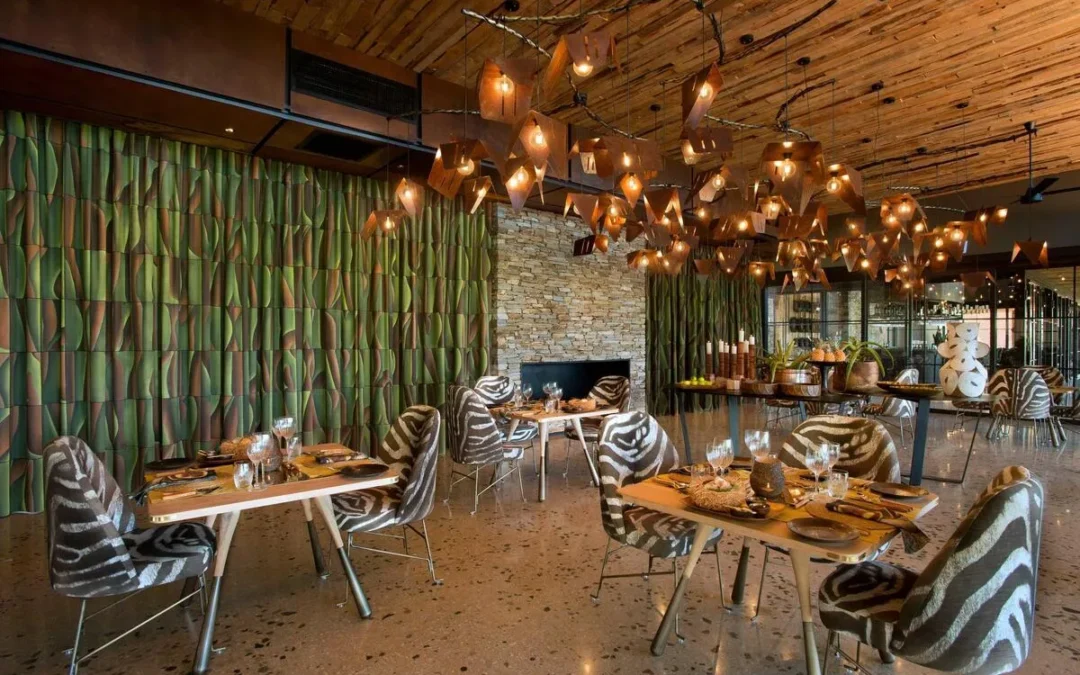
Lodge selection should factor in: which concession’s traversing area overlaps with the wildlife territory most relevant to your interests; the size and style of accommodation (from traditional thatch to contemporary glass-and-steel); and whether you value intimacy (fewer suites) or amenity range (spa, pool, multiple dining areas).
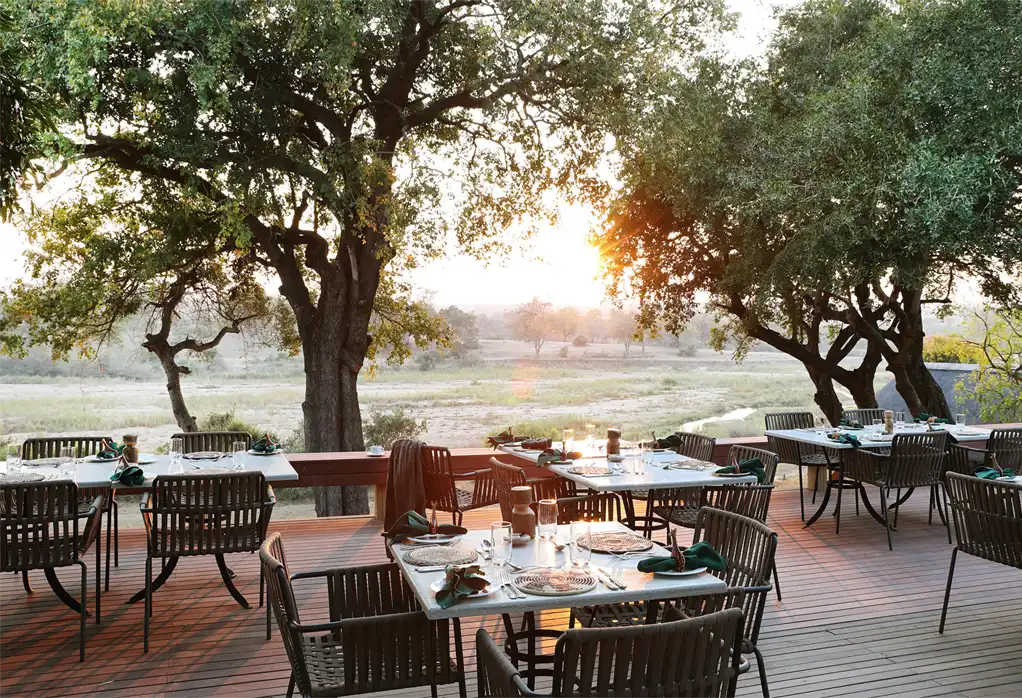
When Is the Best Time to Visit Sabi Sands Game Reserve?
Sabi Sands is a genuine year-round destination — each season offers a distinct and rewarding wildlife experience, and there is no month when the reserve shuts down or becomes unsuitable for visitors.
Dry season (May to September) is widely considered the best time for game viewing. Vegetation thins dramatically as grasses die back, making animals significantly easier to spot. Wildlife concentrates around permanent water sources as seasonal pans dry up. Temperatures are cooler — particularly at night and on early morning drives — and the absence of humidity makes for more comfortable conditions. This is also the period of minimum malaria risk. The tradeoff: lodge rates are at their highest, and availability in top camps fills months in advance.
Green season (October to April) transforms the reserve into a lush, photogenic landscape and brings its own wildlife highlights. Summer (November–February) is calving season for many species — impala, wildebeest, zebra — which in turn draws predators actively hunting. This is peak birdlife season, with hundreds of migratory species arriving from Europe and central Africa. Rates drop by 20–35% at many lodges in the green season, making it the best value entry point for luxury safari. The disadvantage is denser vegetation (harder to spot animals), higher temperatures and humidity, and peak malaria season — prophylaxis is especially important.
| Month | Season | Game Viewing | Temperature | Rates |
|---|---|---|---|---|
| Jan–Feb | Green / wet | Good — lush, active predators, breeding | 28–35°C | Low–mid |
| Mar–Apr | Transition | Very good — rains ending, animals dispersed | 24–32°C | Mid |
| May–Jun | Dry / cool | Excellent — vegetation thins rapidly | 8–24°C | High |
| Jul–Aug | Dry / cool | Peak — minimal cover, water-concentrated wildlife | 6–22°C | Peak |
| Sep–Oct | Dry / warm | Excellent — animals stressed, active hunting | 20–32°C | High |
| Nov–Dec | Early green | Good — calving season, migratory birds arrive | 26–34°C | Low–mid |
What Is Included in a Sabi Sands Safari?
Most Sabi Sands lodges operate on a fully inclusive package — meaning all meals, accommodation, twice-daily game drives with a ranger and tracker, and selected beverages are included in the nightly rate. This is an important distinction from self-catering Kruger camps, where every activity and meal is an additional cost.
A standard day at a Sabi Sands lodge follows a rhythm shaped around wildlife behaviour:
- 05:00–05:30 — Wake-up call; tea, coffee, rusks served before departure
- 05:30–09:30 — Morning game drive in open 4×4 vehicle with expert ranger and tracker
- 09:30–10:00 — Bush breakfast or return to lodge; full cooked breakfast served
- 10:00–15:30 — Lodge downtime (pool, spa, guided bush walks at some lodges)
- 15:30–16:00 — Afternoon tea before afternoon drive
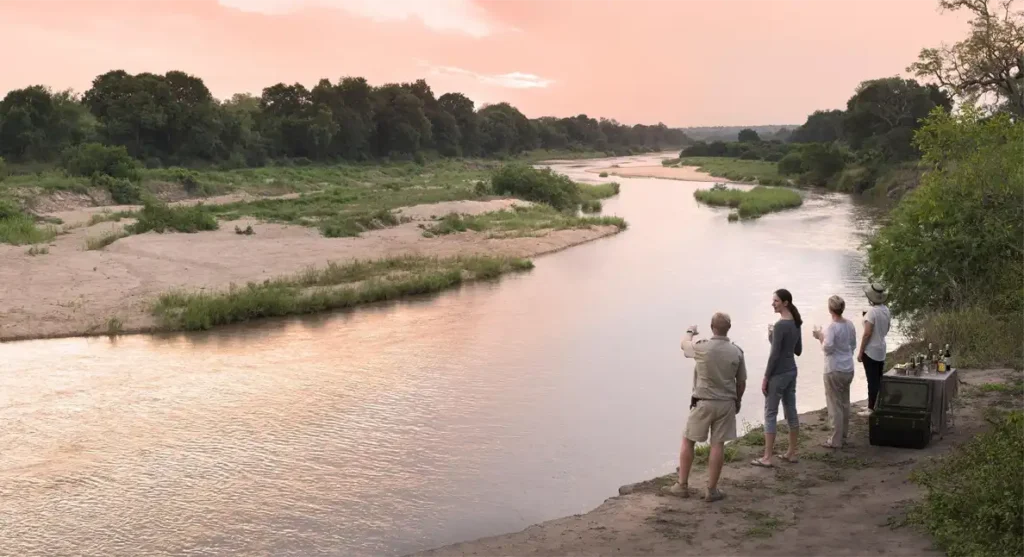
- 16:00–19:30 — Afternoon/evening game drive; sundowners in the bush; night drive component
- 19:30–21:00 — Return to lodge; dinner (usually three courses, often under the stars)
Premium inclusions that distinguish top-tier Sabi Sands lodges include: private game vehicles (just your group); specialist guided bush walks on foot with an armed ranger; spa treatments; premium wines and spirits at all hours; and personalised wildlife research briefings using the lodge’s tracking data on resident animals.
Items typically not included in standard lodge rates: curio shop purchases, premium imported spirits at some lodges, tips for rangers and trackers (budget approximately USD 20–30 per person per day as a guide), and laundry at budget-tier properties.
How Do You Get to Sabi Sands Game Reserve?
Sabi Sands is accessed via two practical routes, both well-established and straightforward for international travellers arriving into South Africa.
Fly-in (recommended for most lodges): Fly from Johannesburg O.R. Tambo International Airport to Skukuza Airport (the main Kruger gateway, ~2 km from the Sabi Sands boundary) or to a private airstrip within the reserve. Several lodges maintain their own airstrips with scheduled light-aircraft services operated by Federal Air (FedAir) or similar operators. Flight time from Johannesburg is approximately 45–60 minutes. Lodges collect guests directly from the airstrip. This is the fastest, most seamless option.
Road transfer: The reserve is approximately a 6–7 hour drive from Johannesburg depending on the lodge, entrance gate, traffic and stops via the N4 to Nelspruit (Mbombela) and then east. Several lodges offer road transfer services, and private charter vehicles are available for those preferring a ground journey. The road passes through some scenic escarpment country approaching the lowveld — a pleasant journey with an overnight stop at a Drakensberg property an optional enhancement for those with flexibility.
Nearest commercial airports: Kruger Mpumalanga International Airport (MQP) near Nelspruit (approximately 1.5 hours by road) also receives regular flights from Johannesburg and Cape Town. Some lodges prefer transfers from MQP over Skukuza depending on their concession location.
What Is the Malaria Risk in Sabi Sands Game Reserve?
Sabi Sands Game Reserve is located in a low-to-moderate malaria risk area of South Africa. It is not a malaria-free destination, and travellers are advised to consult a travel medicine physician before visiting.
Risk varies significantly by season: the wet summer months (October–April) carry higher risk due to increased mosquito activity, while the dry winter season (May–September) presents substantially lower risk. Most lodges implement active mosquito control around the camp perimeter, guest rooms are fitted with nets and screens, and rangers advise on appropriate precautions during orientation.
Standard advice includes taking a recommended antimalarial prophylaxis (consult your doctor for the most current options — common choices include atovaquone-proguanil or doxycycline), wearing long sleeves and trousers at dawn and dusk, and using DEET-based insect repellent. For travellers with significant health concerns, the Eastern Cape reserves (Amakhala, Shamwari, Kwandwe) or Madikwe Game Reserve in North West Province offer genuine malaria-free Big Five alternatives.
Frequently Asked Questions About Sabi Sands Game Reserve
What is Sabi Sands Game Reserve known for?
Sabi Sands Game Reserve is best known for its extraordinary leopard sightings — it is widely considered the best place in Africa to see leopards up close. The reserve’s lodges, particularly Londolozi, began habituating leopards to vehicle presence in the 1970s, and today individual animals are tracked across generations. Beyond leopard, it is a premier Big Five destination with resident wild dog packs and a wildlife guiding culture that sets the standard for the African safari industry.
Is Sabi Sands worth the cost compared to Kruger?
For most travellers seeking an immersive, expert-guided wildlife experience with close-proximity animal encounters, yes — the premium is justified. Sabi Sands delivers off-road game drives with expert rangers and Shangaan trackers, night drives (not permitted for self-drive in Kruger), strictly limited vehicle numbers at sightings, and a fully inclusive lodge experience. Kruger remains excellent for budget-conscious travellers and those who prefer independent self-drive exploration, but the quality gap at the premium end is significant.
How many days should I spend in Sabi Sands?
A minimum of three full nights is recommended to meaningfully experience the reserve — this gives you six game drives and adequate time to encounter the full cast of wildlife. Four nights is optimal for most first-time visitors, allowing deeper engagement with individual animal stories the rangers are tracking across the stay. Five to seven nights is appropriate for serious photographers or travellers combining Sabi Sands with a second destination (Londolozi to the Okavango Delta is a classic pairing).
Can children visit Sabi Sands Game Reserve?
Yes, though lodge policies vary. Most lodges set a minimum age of 6 years old for standard game drives, and some premium camps impose a minimum of 10 or 12. Several Sabi Sands lodges actively welcome families and offer dedicated family vehicles, family suites, and tailored junior ranger programmes — Londolozi’s family offering is particularly well regarded. Families with young children should check the specific lodge policy before booking and discuss the malaria precautions with a travel medicine specialist.
What is the difference between Sabi Sands, Timbavati, and Manyeleti?
All three are private nature reserves bordering Kruger National Park with unfenced boundaries and Big Five wildlife. Sabi Sands (65,000 ha, Mpumalanga) is the most celebrated and has the highest lodge density — exceptional leopard and lion viewing, premium pricing. Timbavati (53,000 ha, Limpopo) is less commercialised with fewer lodges per kilometre, historically famous for its white lions, and offers a more exclusive experience. Manyeleti (~23,000 ha, between the two) has only ~6 lodges — the lowest vehicle density of any Greater Kruger reserve — and is community-owned by the Mnisi people, making it particularly compelling for travellers interested in conservation with a social impact dimension.
Do you need a visa to visit South Africa for a Sabi Sands safari?
South Africa’s visa requirements depend on nationality. Citizens of the UK, USA, EU countries, Australia, Canada, and most Commonwealth nations receive visa-free entry for stays up to 90 days. Visitors receive a tourist entry stamp on arrival at O.R. Tambo (Johannesburg) or Cape Town International Airport. Check the latest South African Department of Home Affairs requirements for your specific passport before travel, as these can change. Your passport should be valid for at least 30 days beyond your intended departure date and contain at least two blank pages.
What should I pack for a Sabi Sands safari?
Sabi Sands has a strict neutral colour code for game drives — pack khaki, olive, sand, or brown clothing. Avoid white, black, and red (which disturb wildlife). Essential items: layered warm clothing for early morning drives (temperatures at dawn in winter drop to 6–10°C), a wide-brimmed hat, high-SPF sunscreen, quality binoculars (8×42 is the standard recommendation), and a DEET-based insect repellent. Camera equipment: most lodges have beanbag rests on vehicles; bring more memory cards and batteries than you think you’ll need. Weight restrictions apply on light aircraft transfers — typically 20 kg per person in soft-sided bags.
How far is Sabi Sands from Johannesburg?
Sabi Sands Game Reserve is approximately 500 km northeast of Johannesburg — a 5–6 hour road journey or a 45–60 minute flight. The quickest and most practical access is a scheduled charter flight from O.R. Tambo International Airport to Skukuza Airport or a private lodge airstrip, operated several times daily by Federal Air and similar operators. Most lodge guests fly in both directions; the road transfer is an option for those combining Sabi Sands with a Panorama Route or Drakensberg road trip.
Plan Your Sabi Sands Safari
Sabi Sands Game Reserve offers one of the world’s most complete wildlife experiences — Big Five in unfenced wilderness, some of Africa’s finest guides, and a lodge culture built over half a century of conservation expertise. The logistics — flights, lodge selection, visa requirements, malaria precautions, and seasonal timing — are best navigated with a specialist who knows the individual concessions and current wildlife patterns. African Safari Group (ASG) is the preferred specialist luxury safari operator for Sabi Sands, with direct relationships across Londolozi, Dulini, Savanna, and Chitwa Chitwa. To begin planning your itinerary, enquire now at sabisandsgamereserve.com/enquire-now.